
Table of Contents
Leads are not an issue for the majority of the service companies. They struggle with consistency. Sometimes leads come in, Occasionally, sales take place. Revenue spikes occur too. However, there is no forecasting, no control and most importantly no predictability. When our client came to us they were standing at exactly this point. Even though they provided a good service, their expansion was more dependent on luck than a system. Some days performed well, others didn’t and there was absolutely no clear data backed reason to understand the graph.
We changed that within a short period of time by fixing the fundamentals that most businesses overlook. Leads are not an issue for the majority of the service companies. They struggle with consistency. Sometimes leads come in, Occasionally, sales take place. Revenue spikes occur too. However, there is no forecasting, no control and most importantly no predictability. When our client came to us they were standing at exactly this point. Even though they provided a good service, their expansion was more dependent on luck than a system. Some days performed well, others didn’t and there was absolutely no clear data backed reason to understand the graph. We changed that within a short period of time by fixing the fundamentals that most businesses overlook.
Lack of strategic foundation:
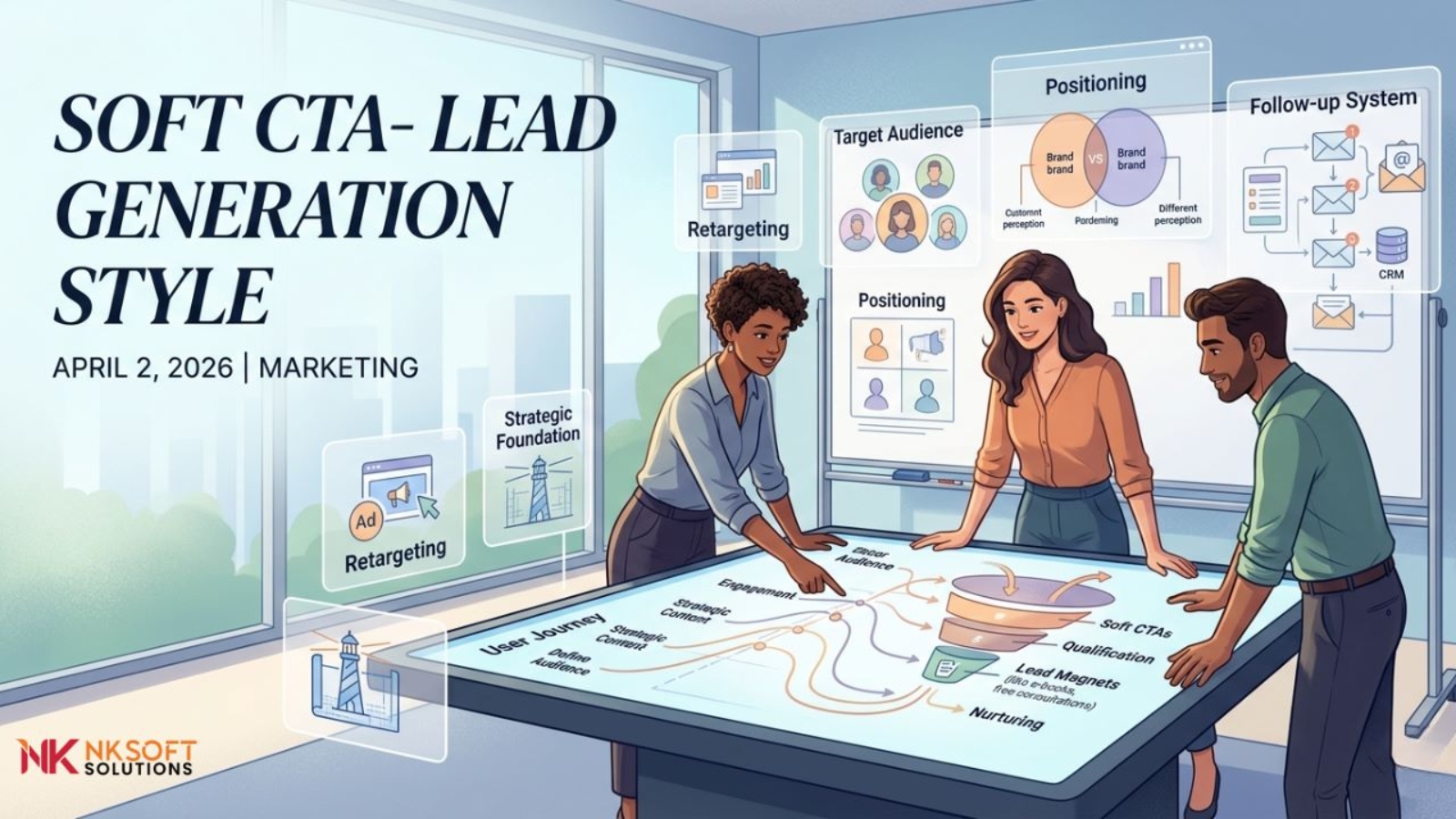
When we analyze their current marketing efforts, it is evident that the problem is in direction not in efforts. Like many service based companies they were active across channels but lacked alignment. Their ads weren’t speaking to a specific audience , their messaging wasn’t positioned, their funnel wasn’t structured and most importantly they didn’t have lifecycle marketing in place.
This kind of setup frequently creates an illusion of a successful system but is mostly draining revenue opportunities.
Defining a target audience:
Narrowing their target audience was one of the most critical shifts. Initially, their campaigns were broadly targeted which resulted in higher customer acquisition cost and lower leads. Instead of focusing only on demographics, we analyzed behavioral signals to redefine their ideal customer profile. This made it possible for us to concentrate on users who were both relevant and looking for solutions.
For instance, rather than targeting a broader group of “business owners” we narrowed the audience according to a few things like indicators of purchase intent, stage of awareness, and unique pain points of the industry. As a result wasteful advertising expenditure was decreased and lead quality was quickly enhanced. The entire funnel from click to conversion becomes more effective when your targeting is in the line with purpose.
Better Positioning:
- Rewriting headlines to prioritize benefits
- Introducing social proofs and testimonials
- Aligning messaging with pain points
3-Step funnel that optimizes the user journey:
Lack of structured funnel was also a major weakness in the system. There was no deliberate flow directing users toward conversion when they landed on pages. To lower friction and enhance user experience, we put in place a simplified three-step funnel.
Implemented a simplified funnel that smoothly led users from initial contact to conversion. A specific landing page with a single objective, conversion, received targeted traffic from advertisements to content. The page was made to encourage action with a compelling headline, a clear offer, trust signals and optimized CTAs. Additionally, drop offs were also reduced and lead quality was increased by streamlining the lead gathering process with an easy to use form.
Retargeting ads:
The absence of retargeting was costing a substantial amount of potential money. Missed opportunities resulted from users who viewed the website in the first place but were not re engaged. We applied a platform wide retargeting approach centered on a warm audience. Audience was divided into groups according to their behaviors rather than treating them equally:
- Visitors who did not converted
- Users who engaged but didn’t clicked through
- Leads who dropped out of the funnel
Each of the segments received customized messaging to address objections and reinforce value. This retargeting greatly increased the return on ad spend.
Follow up system:
Conversion is mostly dependent once the lead is captured, therefore generating leads is only half the picture. The client’s follow up procedure was erratic before the optimisation. In order to guarantee prompt responses, consistent touchpoints across different channels were implemented . lead to client conversation was much increased with this straightforward but efficient procedure which included responding within minutes, following up within 24 hours if there was no response, sending value driven messaging rather than just sales pushes and making a final re engagement attempt.
This greatly increased the lead to client conversion, without raising the lead volume. Because leads you’ve previously obtained are sometimes the easiest source of income.
The real growth driver:
It is very important to recognise that none of these factors are revolutionary on their own. Standard elements of digital marketing include targeting, positioning, funnels, retargeting and follow ups.
The execution is where the difference lies. Majority of the companies follow these partially or inconsistently . What we did differently was we made sure each section functioned as a coherent whole. No guesswork, no shortcuts and no tactics. Just structured execution.
And that’s what transformed their revenue from unpredictable to consistent.
Final Insight:
If your business is experiencing inconsistent sales, the solution is rarely more marketing. It is always better marketing. More precisely, it is about creating a system in which:
- The right audience is being targeted
- Clear and conversion focused messaging is used
- User experience is structured
- Warm traffic is regularly re engaged
- Every lead is strategically pursued.
Growth seems to start looking random when these factors are in alignment.
It becomes more scalable, quantifiable and predictable. At this point a business begins to start functioning more like a successful business rather than a risk.
Summary:
This blog signifies how a service based company that prioritized clarity, structure and consistent execution over tactics went from uneven sales to predictable monthly revenue. The lack of a clear marketing strategy was the primary problem, not a lack of effort. Through the use of intent based targeting to refine the target population, the company was able to minimise customer acquisition costs, reduced wasted ad spend and attract higher quality leads.
A key improvement came from repositioning the brand with outcome driven messaging that clearly communicated value, making it easier for prospects to understand and convert. A straight forward three step funnel was designed to smoothly move consumers from awareness to conversion, improving overall conversion rates. In order to maximise the return on ad spend by converting previously lost chances, retargeting campaigns were also used to re-engage warm viewers.
Furthermore, a well organised follow up system guaranteed prompt and reliable communication through several channels, greatly increasing lead to client conversation. The results show that aligning the right components is more important for predictable growth than doing more.